Everything Must Go
The biggest estate sale in history is coming, and almost nobody is pricing it in.
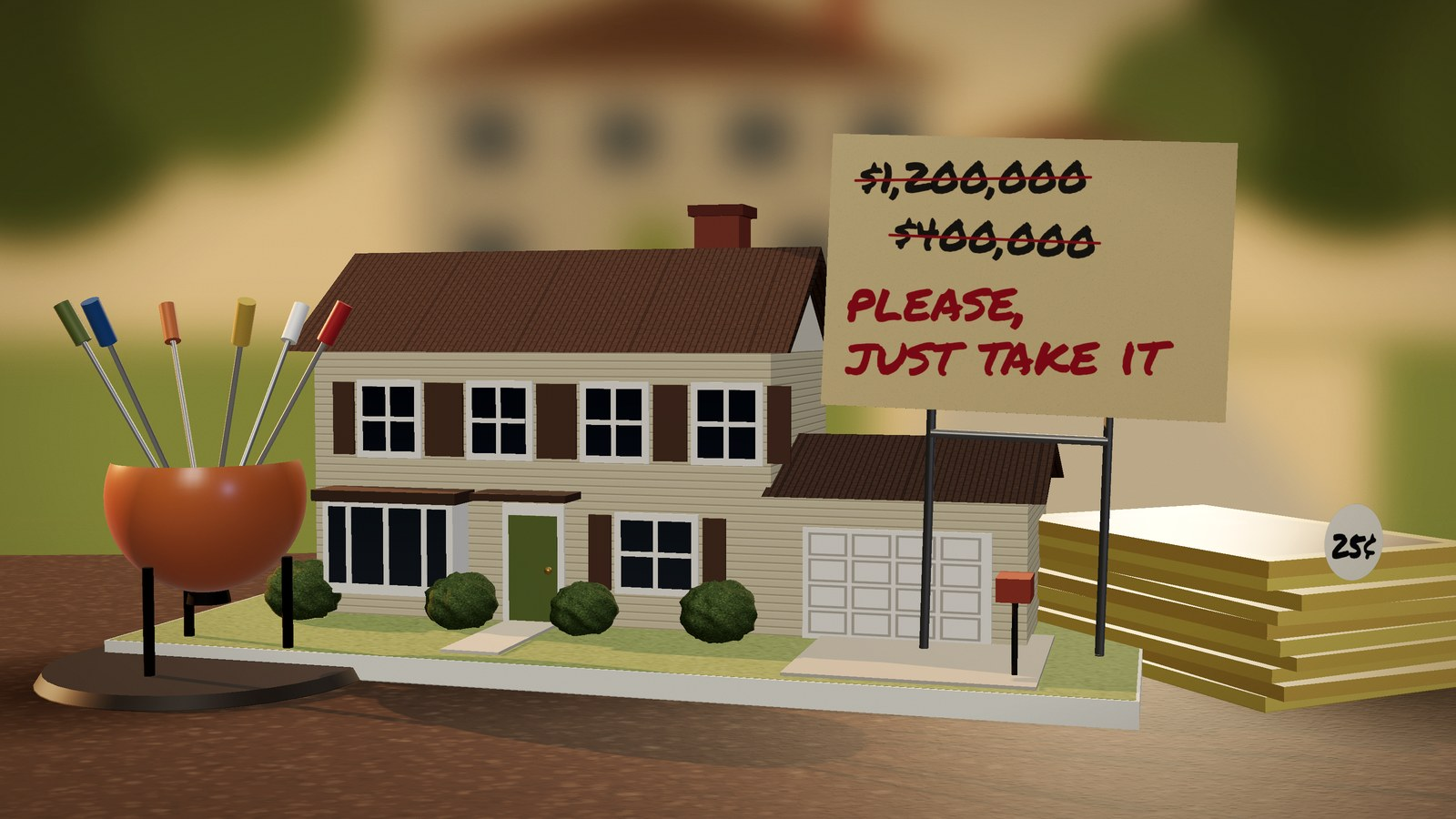
Every Saturday morning in May, the older suburbs turn into flea markets.
Folding tables appear on front lawns. Handwritten signs get taped to telephone poles. And by 7:30AM there’s a guy in a fishing vest digging through a box of National Geographics from 1987 like he’s looking for a winning lottery ticket.
You know the inventory. A fondue set, never used. Forty years of Christmas ornaments, sorted by a system only one person on Earth ever understood. A treadmill that has functioned as a clothes rack since roughly the Clinton administration. And a china cabinet that nobody under 60 has ever wanted, priced at $40, then $20, then “please, just take it.”
I’m rambling. But you’ve been to one of these.
Demographers have a slightly gross name for the generation running most of these sales: the pig in the python.
The Baby Boom was a bulge so large you could watch it move through the economy like a meal moving through a snake. In the 1950s it was diapers and baby food. In the 60s it was schools. In the 70s it was universities and first jobs. Then came starter homes, bigger homes, and the suburbs with the good school districts and the three car garages.
Every industry that sat in the path of the bulge got rich. Every industry behind it got… quieter.
And now the pig has reached the end of the python.
The last item on the table at this particular estate sale isn’t the fondue set.
It’s the house.
At this point, you might be wondering what the hell a box of old National Geographics has to do with your net worth, your kids, and the biggest purchase most people will ever make.
Everything, unfortunately.
The Maternity Ward Problem
Housing is almost always explained as a supply problem. Not enough homes, too much red tape, not enough cranes in the sky. And in the short run, that’s true. (Ask anyone under 35 what a “starter home” costs these days and watch their eye start twitching.)
But a market needs two things: something to sell, and someone to buy it. We spend nearly all of our time arguing about the first one.
Here’s the thing about buyers. The pipeline for every future homeowner starts in a maternity ward, roughly 30 years before the open house.
And in most rich countries, that pipeline has been running below refill levels since about the time disco was invented. (I’m not blaming disco. I’m just saying the timing is suspicious.)
South Korea is the extreme version. Its birth rate is now well under one child per woman. That isn’t a slow leak; that’s a pipe somebody cut with a hacksaw.
Governments can print money. They can’t print 30 year olds.
Sure, they can try to recruit some from elsewhere. But every other aging country is shopping in the same aisle.
Which brings me to the part nobody seems to be pricing in…
The Largest Estate Sale in History
The Boom generation is now somewhere between the golf course and the great beyond. And after the retirement party comes, eventually, the estate lawyer.
So who ends up with the house?
Usually, kids who live three provinces away, already have a mortgage of their own, and spent most of their teens plotting their escape from that exact town. They aren’t moving back. They’re calling a realtor.
Now picture the open house a few years from now. Five homes for sale on the same street, all with the same original oak kitchen, all listed the same month. And a sign in sheet with three names on it.
Spoiler alert: that doesn’t end with a bidding war.
When the buyers stop showing up, the price is whatever the last one says it is.
To be fair, this won’t happen evenly, or all at once. Governments will throw everything they’ve got at holding prices up, and in a few hot cities it’ll actually work, for a while.
But you can’t legislate your way out of arithmetic forever.
So here’s my bluntest take of the whole piece: if your retirement plan is “my house will be worth a fortune”, I’d get a second plan.
Previews of Coming Attractions
You don’t need a crystal ball to see where this goes. (Mine works about as well as anyone else’s, anyway.) A few places are already running the experiment for us.
After reunification, eastern Germany lost so many people to the west that it ended up demolishing hundreds of thousands of empty apartments. Not selling them. Demolishing them, because nobody was coming.
In rural South Korea, schools close every year for lack of kids. Some villages haven’t heard a newborn cry in years.
People don’t disappear evenly. They drain.
Like water finding the lowest point, the population pools into a handful of big cities with the jobs, the hospitals and the decent coffee. Those places stay pricey. Everywhere else gets very, very quiet.
The 20th century was a land rush. Every new subdivision was a little boomtown, riding the pig through the python.
The 21st century looks a lot more like the ghost town phase.
But honestly, empty houses in the countryside are the small problem. The big one is who pays the bills for an aging country…
Follow the Money (Or the Lack of It)
Every pension plan, health system and social program in the developed world was designed around a population shaped like a pyramid. Lots of young workers at the bottom, a narrow band of retirees at the top.
We’re turning it into something closer to a wine glass.
A shrinking base can’t carry a growing top. Something has to give.
Here’s my slightly conspiratorial read on why every level of government seems allergic to letting home prices fall.
A retiree with a paid off house worth a seven figure sum can fund their own care home, their own renovations, their own late life everything. A retiree whose house is worth half that becomes, at least partly, the taxpayer’s problem.
Seen that way, keeping house prices high is the cheapest elder care program a government could ask for. It just happens to be paid for by everyone trying to buy their first place.
(I’m no demographer, and I’d love to be wrong about this one.)
But that trick only works for so long. Eventually the bill for an aging population lands on somebody’s desk. And I suspect it lands on the desk of whoever owns most of the assets, which is to say, the people at the top of the wine glass.
The next few decades of policy are going to look very different from the last few.
So where does that leave you and me…
What I’d Actually Do
Take what’s useful, ignore the rest:
- Live in your house. Invest somewhere else. Plan as though its price does nothing exciting for the next decade or two. A home is shelter, stability, and a big part of a good life. It is a lousy pension.
- Assume the rules will change mid game. When governments get squeezed, they rarely send a memo. They use inflation, new taxes and new restrictions, and the benefits you were counting on get thinner while you’re not looking.
- Keep some eggs outside the basket. Hold a slice of your wealth in things that don’t depend on any one system staying healthy, and keep your family’s options open on where you could live and work if you ever needed to.
- Get really good at turning effort into profit, and profit into assets. In a growing economy, a rising tide does some of the work for you. In a shrinking one, the only people who get ahead are the ones who can create value and put their money somewhere it compounds.
Last Call at the Estate Sale
There’s a little secret that anyone who’s been to an estate sale knows.
Around 2PM, the prices collapse. The family is tired, the truck is coming at 4, and everything must go. The fondue set goes for a buck. The china cabinet goes for free. And the people who show up late, with cash and a pickup, get the best deals of the day.
Messy, shrinking eras tend to work the same way. They’re chaotic and they’re unfair, and they also tend to be when new fortunes get made, by people paying attention while everyone else is panicking.
The trick is to be the one with the truck, not the one stuck holding the china cabinet.
~ Braden
P.S. If you happen to own a fondue set, keep it. They come back in style every 30 years. (Unlike the china cabinet.)